Sesame Pea Shoot Salad

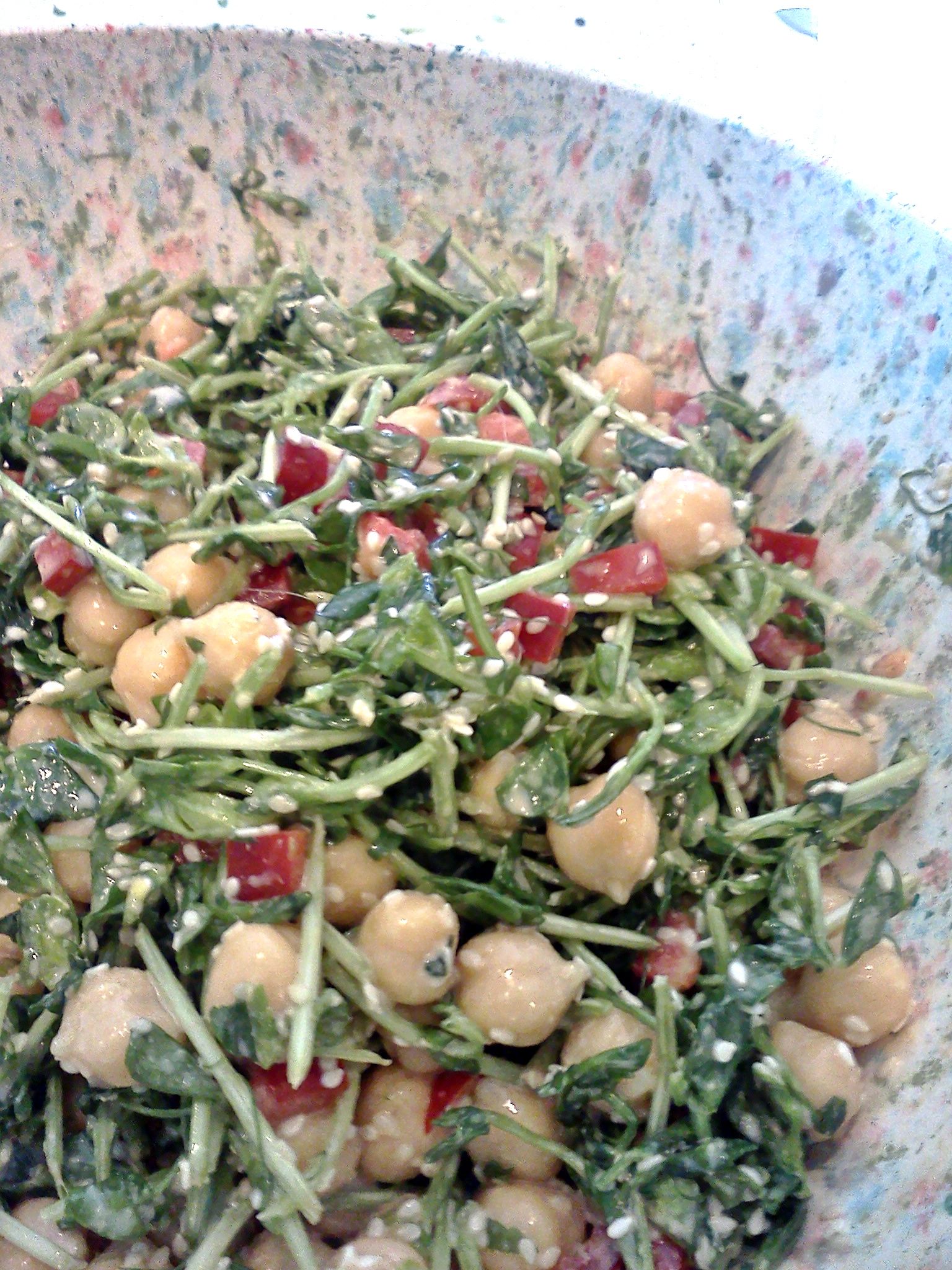
Sesame Pea Shoot Salad with red pepper and chickpeas

This salad was my veggie offering at two Memorial Day BBQ parties that I attended; it’s a simple salad of basically 3 vegetables and a tangy dressing.

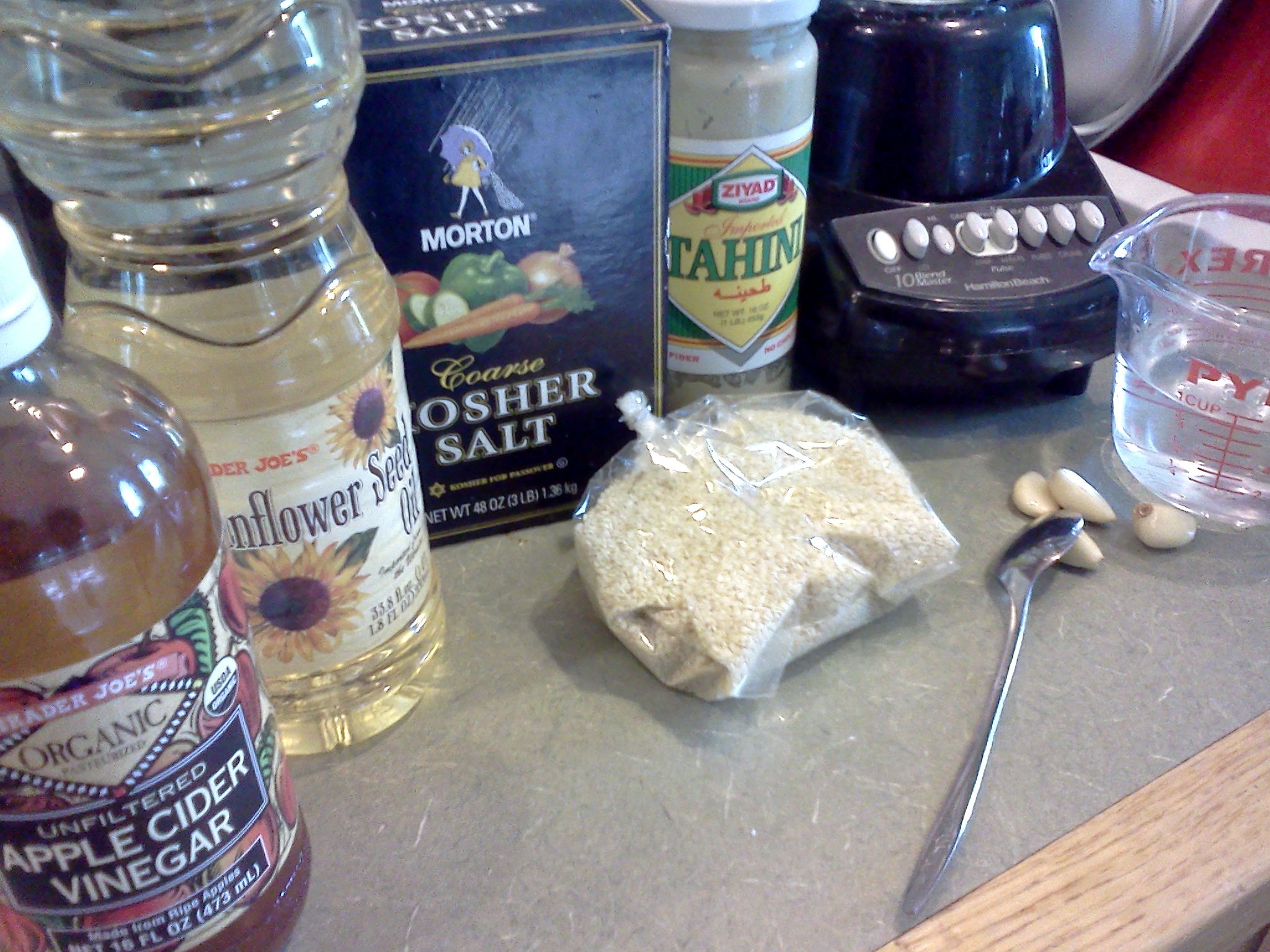
The salad dressing is my homemade version fo Trader Joe’s Goddess dressing.  I simply worked from the ingredient list on my empty bottle: vegetable oil, water, tahini, apple cider vinegar, soy sauce, [lemon juice,] salt, garlic, sesame seeds, [spices, zanthan gum.]

“Goddess” dressing ingredients

I skipped the ingredients shown in brackets (above), used sunflower oil, and I used tamari instead of soy sauce.  (Tamari is basically a gluten-free soy sauce.)

Combine these ingredients in a blender and liquify while adjusting to taste.  To the best of my recollection I used these quantities:

  • ~2 T. sunflower oil
  • ~1/3 cup water
  • ~1- 1 1/2 T. apple cider vinegar
  • ~2 T. tahini
  • ~1 1/2 T. tamari (or soy sauce)
  • 4 cloves garlic, coarsely chopped
  • salt to taste (sparingly, as the tamari or soy sauce is salty)

I deferred the addition of~4 T. sesame seeds to the salad afterward rather than blending into the salad dressing.

If you’ve not had Trader Joe’s Goddess dressing, it’s a smooth dressing that is tan in color (slightly browner than the tahini).

The blended “Goddess” dressing

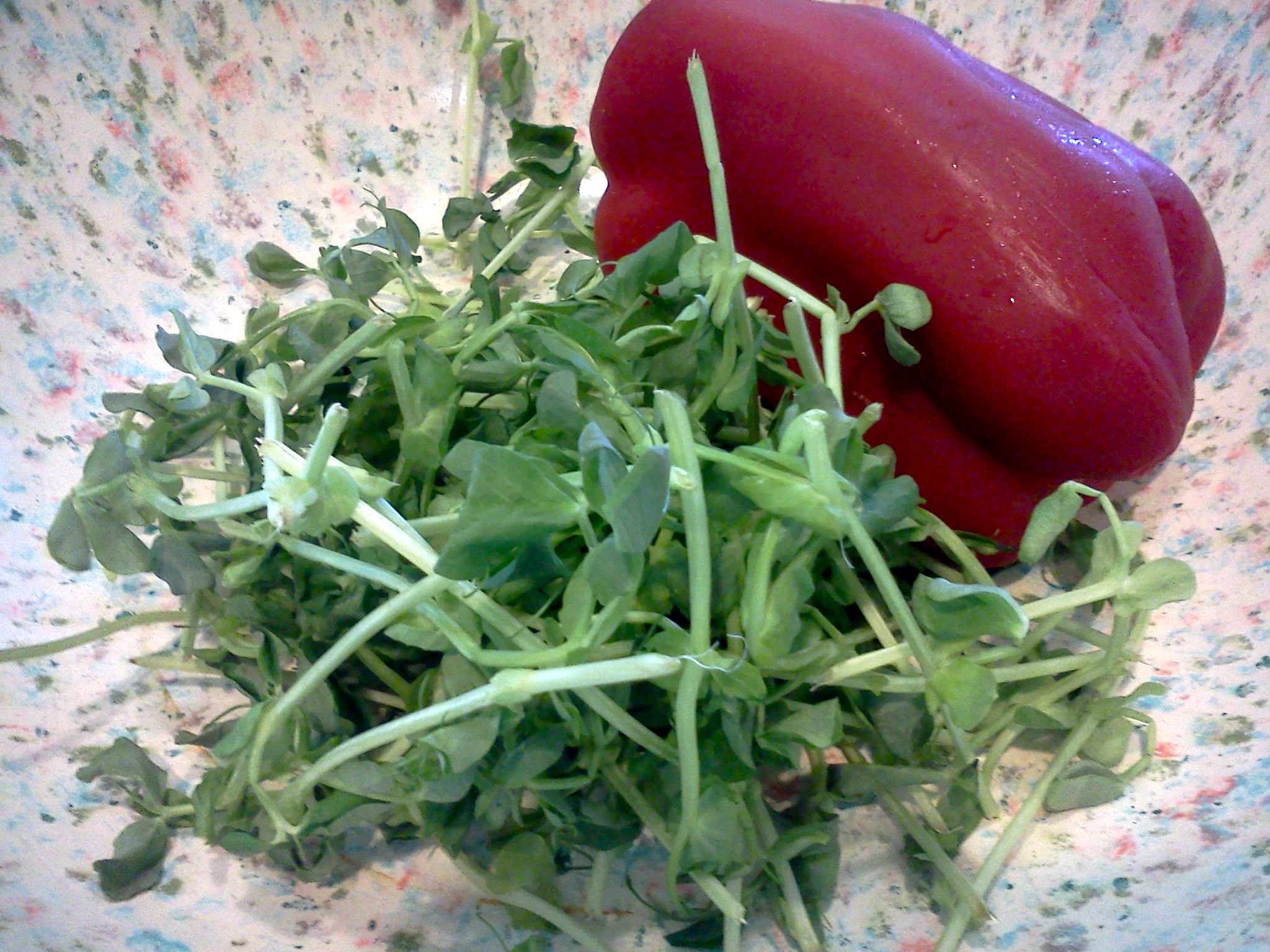
To prepare the salad, I coarsely chopped 8 oz. of pea shoots, finely diced one red pepper (seeds and veins removed), and drained and rinsed one soup-sized can of chickpeas.

Then I tossed the pea shoots, red pepper, and chickpeas with about 1/4 of the aforementioned prepared dressing (add sparingly, so as not to drown the vegetables in dressing), and a generous amount of sesame seeds.

I don’t know whether or not everyone enjoyed this salad, but I did, and the dish was empty by the time I left the party.

Regardless, whether you buy it from the store or make it yourself, this dressing is a hit.

Yay, I’m all caught up – now just to read all your recipes that I missed! :-)

Scrambled Egg with Tortilla Strips and Portabella Mushroom

Scrambled Egg with Tortilla Strips and Portabella Mushroom

Here’s a typical sort of quick breakfast that I make… especially since plain scrambled egg is *boring*.

First, cut one or two corn tortillas into strips (maximum length about half the diameter of the tortilla) and crisp these in olive oil in a pan, then remove from heat.  Saute sliced baby bella mushroom, perhaps with some garlic, salt and pepper, and place those aside as well.  Prepare one or two scrambled eggs as you like; here I mixed in about 1 T. of kyopoolu sauce; I’ve mentioned this red pepper, eggplant, and garlic-based sauce in a number of earlier posts.  Lastly, mix the ingredients together and top with cheese if you like:
A great way to add taste and texture to boring old scrambled egg!

I learned to add crisp corn tortilla strips to scrambled egg from my Mexican sister-in-law. :-)

Scotch Bonnet Queso Fresco

Scotch Bonnet Queso Fresco

This is my second foray into cheese-making; my first was making paneer, that I made according to this post: Paneer 101.

As far as I know, Mexican queso fresco is pretty much the same thing as paneer, except usually saltier and is made using vinegar to cause the milk to curdle, instead of lemon juice.  It’s a simple, fresh, crumbly, non-melting cheese that is great for Mexican dishes.

If you’ve followed my blog, you might have noticed I’ve been having a love/hate, hmm no, just a relationship with scotch bonnet peppers. I’ve loved habaneros for both their heat and flavor, but most recently bought about 10 scotch bonnets instead, after seeing their similarity and learning they’re related varieties. Unfortunately, I’m not enjoying them as much. To me, the scotch bonnet has just been a ridiculously hot and a less flavorful, red version of the tasty orange habanero. Oh, well, I only have one scotch bonnet left so I’m determined to use it; I thought, “Why not put it in a cheese, to be soothing from its heat and impart some nice color and spice to this typically mild cheese?”

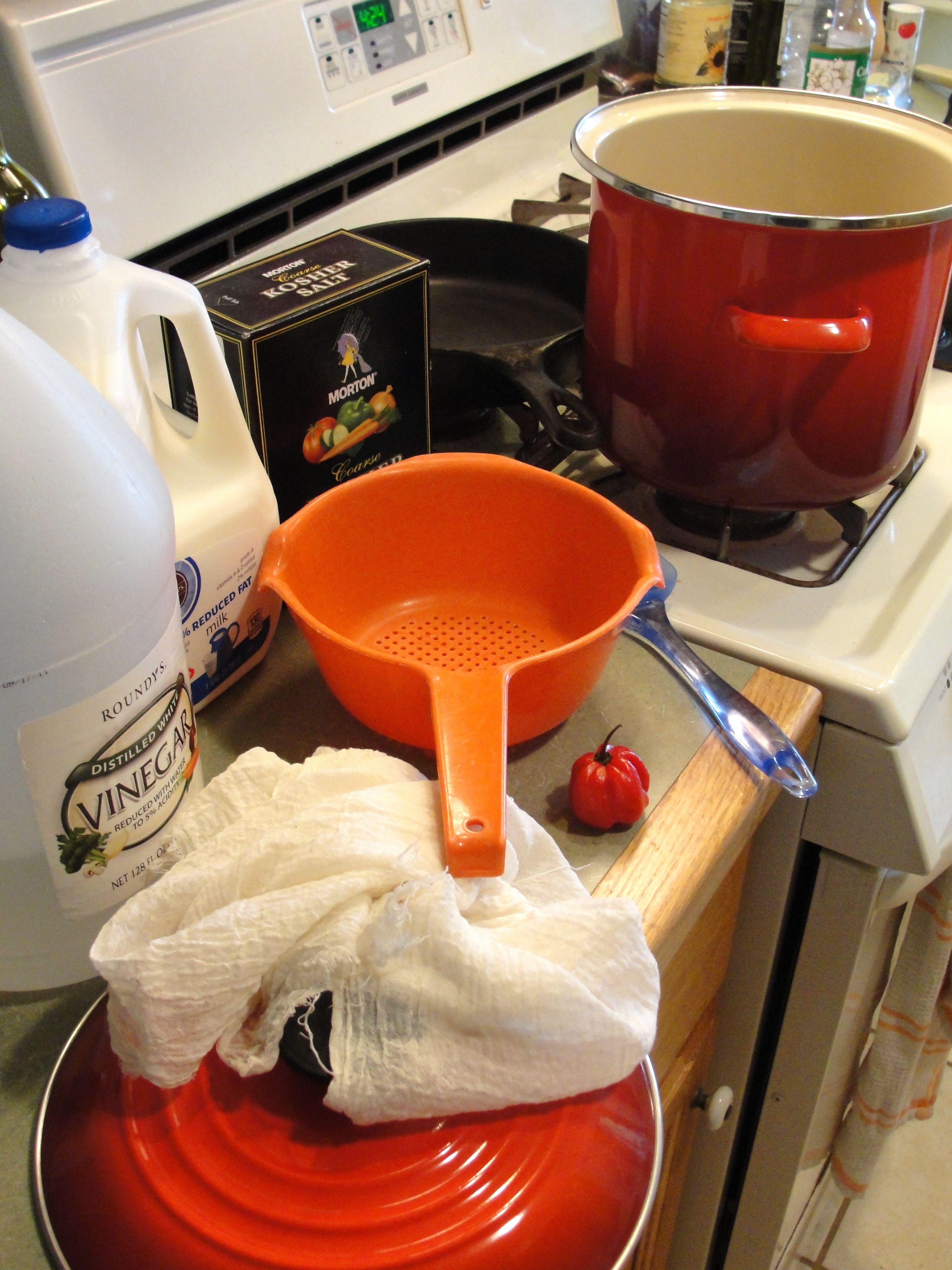
Preparing to make queso fresco.

Ingredients:

  • milk, 1 gallon; I used 2% just because that’s what I had on hand.
    (Higher fat content means higher yield, so one would typically use whole milk.)
  • vinegar, white or other, ~6 T.
  • salt, 2 T., plus more to taste
  • optional: 1-3 scotch bonnet peppers, finely minced and lightly sautéed

Since the scotch bonnet addition was an experiment, I decided to prepare 2/3 of the cheese as plain queso fresco, and 1/3 with the pepper, hence I used only one pepper.

Preparation:

You know what? I’m not going to describe this. It’s written up well in both of these recipes:

Squeezing the whey from the curd in cheese cloth

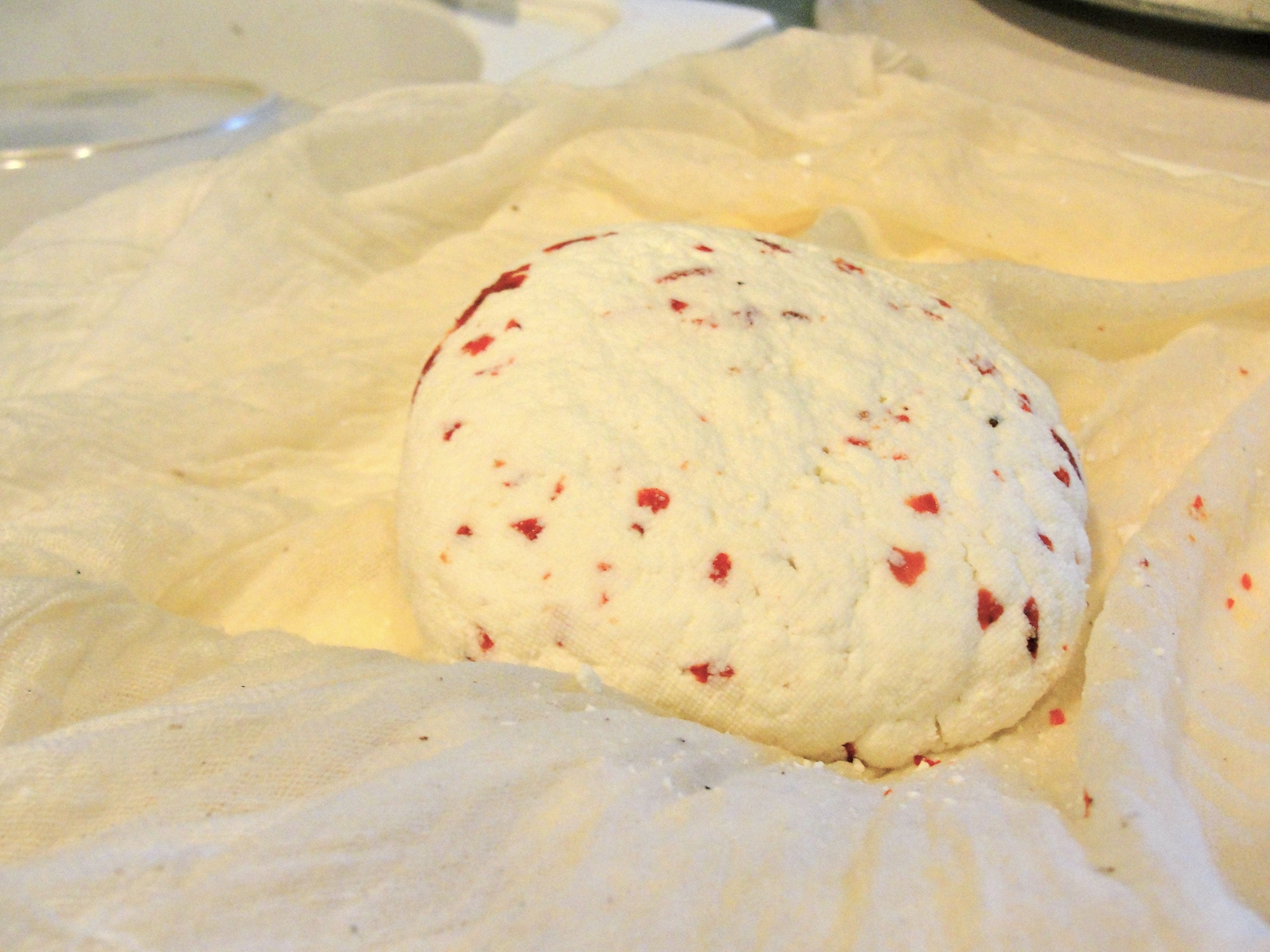
Scotch Bonnet Queso Fresco before pressing

Using plates to press moisture from the cheese
(I pressed it with the plates held vertically over the sink.)

Drying queso fresco under weight

I will leave you with these tips from my experience, however:

  • The first time, when I made paneer, I didn’t squeeze enough of the moisture from the cheese.  This time, at a friend’s suggestion, I pressed it between plates, and that did the trick.
  • Still concerned that I hadn’t removed enough moisture, I made the mistake of letting it sit in the refrigerator, in cheese cloth after pressing, for 6-8 hours, intending to dehydrate it;  this was a bit too much.  If it’s squeezed properly, 2 hours on the countertop is probably plenty “drying” time.
  • Queso fresco is typically quite salty.  Even though I added 2 T. of salt to the milk, the result wasn’t very salty, so before squeezing it in cheese cloth, I added some more salt (at the same time as the minced hot pepper); in my opinion it still wasn’t enough salt.  Next time I will add even more salt when squeezing it, before pressing it.

Scotch Bonnet Queso Fresco

This was a good Cinco de Mayo project, and I was left with two varieties of queso fresco ready for my forthcoming Chicken Tinga tostadas and tacos!

Asparagus & Paneer Masala

Asparagus & Paneer Masala with potato and swiss chard, accompanied by Saffron Rice

It being springtime in my hemisphere, asparagus is de rigueur.
This dish is my melding of that favorite, oven roasted, and combined with a new challenge for me: paneer – a fresh, Indian cheese, that I hoped would complement the asparagus.

First, I prepared the paneer. As it happens, I signed up for a cheese-making class this coming weekend and was looking forward to trying my hand at a fresh cheese such as queoso fresco. Coincidentally, Tahmina post Paneer – 101 just in time for me to give it a try.  I prepared the paneer just as she described, using the juice of a bit more than 2 lemons, and similarly pressed it at room temperature under a cast iron skillet for about 3 hours before using it.  Once the paneer was kneaded smooth, I also added toasted cumin seed (1 1/2 t.) and salt (3/4 t.), that I’d crushed a bit with a mortar and pestle, and distributed it evenly throughout the paneer.

Paneer with Toasted Cumin Seed

I prepared the saffron rice, first, by soaking perhaps 10 saffron threads in a few teaspoons water for an hour or two.  Then I prepared rinsed jasmine rice in a rice cooker; when it was done, I separated half of it into a bowl, and thoroughly mixed it with the saffron and the yellow water in which it was soak.  Lastly, I combined the yellow and white rice, and mixed them until approximately evenly distributed.  (Chopsticks are a good choice of tool to mix rice if it is somewhat sticky.)

I prepared the masala roughly according to these two recipes: Squash, Potato, and Chard Curry and Subzi Paneer Masala.  I used a large red onion and 2 cans of diced tomato for the sauce, puréed in a blender with minced garlic and ginger.  I diced multi-colored small potatoes (brown, red, and purple) and partially cooked them in oil (left from frying the paneer) before adding them to the masala. I cut the chard stems into bite sized pieces, and the greens more coarsely, adding them sometime after the potato, since they need less time to cook.  Also, rather than fresh hot pepper, I used a bit of cayenne powder.

While preparing the masala, I roasted the whole asparagus spears under the oven’s broiler on a foil-lined baking pan, with olive oil, being sure to turn them occassionally and not allow them to burn.  (If you were to serve roasted asparagus as a side-dish, you’d likely add, salt, pepper; since I was preparing it to top the masala, I used only the oil this time.)

To serve, rather than mixing the asparagus, cut into bite-sized pieces, and fried paneer into the masala, I simply tossed them together, keeping them warm in the oven, and placed them atop the masala so that their textures and colors were retained.

All in all, I wasn’t completely happy with this dish.  The tomato and yogurt-based sauce didn’t have the smooth consistency nor the bright orange color that I expected and had seen, for instance, in butter paneer masala dishes at restaurants.  I used a low fat greek yogurt, rather than the usual [high fat] greek yogurt that I buy at Trader Joe’s;  that may have been part of the lack of smoothness to the resulting sauce.

Here are a few things that I learned:

  • Making fresh cheese is not difficult, but practice may be necessary to get the desired consistency.  Mine was a bit on the soft side for pan frying;  I should have squeezed just a bit more water from the paneer before pressing it.
  • To present the beautiful colors of vegetables such as various potatoes and rainbow swiss chard, don’t cover them in a tomato-based sauce.  Next time I think I will either use the potato and chard or the blended tomato sauce, but not both. :)
  • I used whole coriander seed, that I toasted lightly with the cumin seed.  In this dish, however, the whole coriander seed was a bit too much of an occassional flavor explosion, so I would grind it next time.  (I have had a shrimp and broccoli dish that is perfect with whole coriander seeds, so it works with some things and not others.)
  • Bright yellow saffron-rice and white rice mixed doesn’t provide quite enough contrast to be as visually dramatic as I wanted.  Some Indian restaurants must use red food coloring as well.

I was quite happy with the paneer, and now I do have plenty masala left-over for meals this week… back to work. :)

St. Paul Sandwich

Image

St. Paul Sandwich

Here’s a great sandwich that I had this morning instead of a typical breakfast sandwich: the St. Paul Sandwich; it’s essentially a hamburger made with an Egg Foo Young patty instead of a beef patty.  I was introduced to this sandwich on the public television program, “Sandwiches That You Will Like” some years ago.
Despite its name, the sandwich originated in St. Louis.

To prepare, first make the egg foo young like in my earlier recipe; this time I used leftover chopped Easter ham, thinly sliced napa cabage, and chopped baby bella mushroom.  (I used 4 “large” eggs for 3 patties.)

I served the patty with sauce on a small bun (another Easter leftover), topped with some julienned carrot and a bit of onion, a leaf of napa cabbage, a couple slices of roma tomato, and mayonnaise.

This is a tasty and unique sandwich for any time of the day, but it’s quick to prepare for breakfast or lunch from leftover egg foo young; the patties with sauce will keep for a day or two in the fridge and reheat well in a microwave.

Vegetable Pulao with Egg

Vegetable Pulao with Egg

This is the first dish that I’ve made from a fellow WordPresser’s blog, since I started my blog last month, specifically from this recipe: Vegetable Rice Palao.

This is a great vegetarian dish with a combination of spicy (especially with the quite hot Indian chili powder I had) and sweet (with the raisins, sweet corn, and carrots)!

I had most of the ingredients on hand, except I used a quality garam masala rather than cardamom and whole cinnamon; I put two star anise pieces in as well.  Also, *gasp* I didn’t have basmati rice, so substituted rinsed jasmine rice instead.  I cut the recipe to 2/3 (i.e., 2 cups uncooked rice, but the suggested amount of vegetables, raisins, and cashews), only because it’s quite a large quantity and I meant to eat this as a standalone meal, so I wanted a slightly higher ratio of vegetables to rice.  The suggested pairing with Egg Curry sounds great, but I was being lazy so just made some hard-boiled eggs, and buried them in the pulao to add some more protein to the dish after removing it from the heat.

Hmm, in hindsight, that’s probably too many changes to a desi chick’s recipe, but that made it fun for me; perhaps I have a problem following directions. :-)

Even with the reduced amount of rice, I got 6 full servings, some of which I served to friends with raita and garlic naan (Trader Joe’s).

Raita ingredients, stirred together:

  • greek-style plain yogurt, 16 oz.
  • cumin powder, 1/2 t.
  • garam masala, 1/2 t.
  • garlic, 3 cloves, dry roasted and minced
  • carrot, 1, peeled and finely julienned short pieces
  • cucumber, 1, peeled, seeded, and finely chopped
  • onion, 1, small yellow, minced
  • tomato, 2/3 can, fire-roasted, diced
  • saffron (perhaps 6 threads)
  • fresh lime juice, from one lime (or add progressively to taste)
  • salt (to taste)

Vegetable Pulao with Egg and Raita

Un Cuento de Dos Chiles Rellenos

A Tale of Two Stuffed Peppers

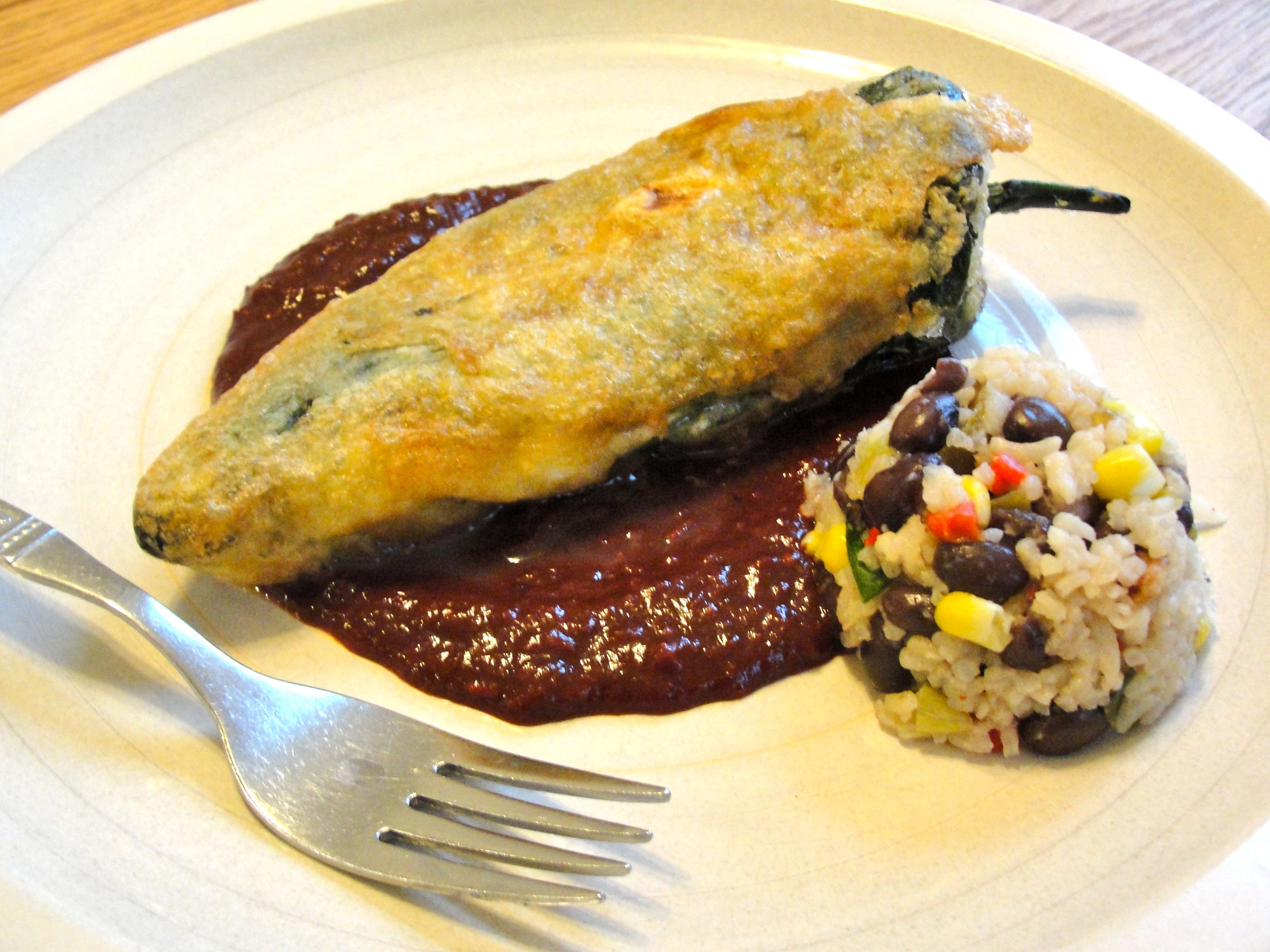
Chile Relleno de Queso with Ancho Chile Sauce and Scotch Bonnet Beans and Rice

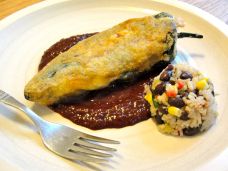
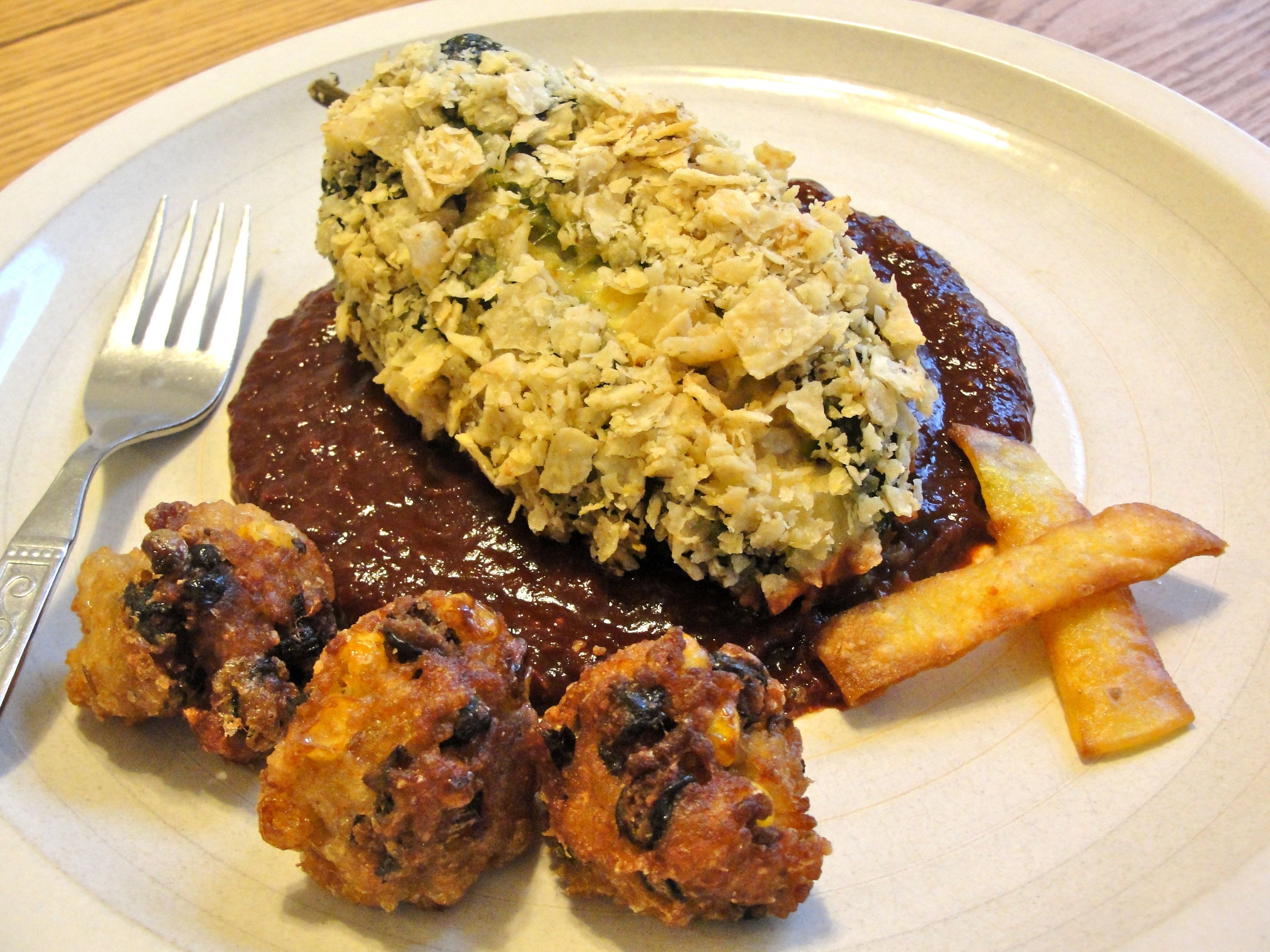
Baked Chile Relleno stuffed with Queso Fresco, Beans and Rice, atop Ancho Chile Sauce, accompanied by Rice Fritters

The ranting chef, in a recent post, asked, “Do you have a `go to’ test dish for the places you go?”
My favorite “go to” dishes for mexican restaurants are: (1) torta and (2) chiles rellenos.  I’d not made either of these at home, so now I’m tackling chiles rellenos.  In my experience, chiles rellenos are typically poblano peppers, stuffed with cheese, batter-dipped, and deep-fried to a golden brown.  As with other stuffed peppers, there are many variations involving the stuffing and the coating.  For instance, many years ago at a restaurant, I enjoyed a nice chile rellenos coated with crushed, multi-colored tortilla chips.  Since I mostly avoid deep-fried foods, that was a great alternative that, instead of submersing in oil, could be baked – like the relatively bland, but convenient bell-pepper-based stuffed peppers my mom used to make with ground beef, rice, and tomato sauce…  and, yes, I know tortilla chips are deep-fried.  But, while shunning explicitly deep-fried foods, I did also allow myself potato chips, but not french fries.  Whatever; live and let me live with my own innocuous delusions. :)

Last week I bought three fresh poblano peppers (about $1.50) and some queso fresco (about $7 for 12 oz. – seemed expensive, but that’s Whole Foods for you) and decided I would make each as a differently-prepared chili relleno.

Making chiles rellanos for the first time is non-trivial.  First, you’ll want an accompanying sauce or salsa.  Then, you’ll need to blacken or blister and peel the peppers (to remove the bitter skin), carefully clean and stuff them, coat them, and then cook them, preferably without the filling falling out and without the result looking disgusting.  I managed that on two out of three of the peppers I prepared: (1) a typical cheese-stuffed pepper, and (2) a baked, tortilla chip-encrusted pepper with a more interesting filling;  the third pepper we’ll appropriately name, “chile relleno not appearing in this post.”  (It will, however, be appearing on my plate of leftovers for dinner sometime soon, i.e., too ugly to post, but not too ugly to eat.  Full disclosure:  I waited too long to batter-dip it and the batter had lost its meringue-ness, and thus did not coat the pepper well.)

To accompany the chiles, I used an Ancho Chile Sauce that I had prepared in advance.  I liked the idea of matching the stuffed poblano with an ancho chile-based sauce, since the ancho chile is actually a dried, ripe poblano pepper.

Typical Chiles Rellenos ingredients:

  • large fresh green poblano peppers (2)
  • canola oil
  • queso fresco (~4 oz., crumbled)
  • all-purpose flour
  • eggs (3 separated, whites whisked until frothy and smooth, yolks carefully folded in)

As an alternative filling, I created a Scotch Bonnet Beans & Rice, since I wanted a spicy kick, as chiles rellenos are typically quite mild; I acheived a moderate level of heat by using just a single scotch bonnet pepper, with seeds and veins removed.

Baked, Tortilla Chip-encrusted Chile Relleno ingredients:

  • large fresh green poblano pepper (1)
  • queso fresco (~1.5 oz., crumbled)
  • scotch bonnet beans and rice (see below, or use another stuffing)
  • egg (1, whisked, as a wash)
  • tortilla chips (crushed, ~1/2 cup)

To get started, we need to blacken and blister the skin of the peppers as thoroughly as possible. This is so that we can peel them.  I used a combination of methods: directly placing them over the stovetop gas flame and turning them in a pan over high heat.  Previously I’ve done this under the broiler (turning frequently); in hindsight, I think the broiler works best.
Once blackened and blistered, place them in a plastic Zip Loc bag to steam and cool.

Blistering the Poblano Peppers for peeling

While the peppers are cooling, prepare the stuffing(s).

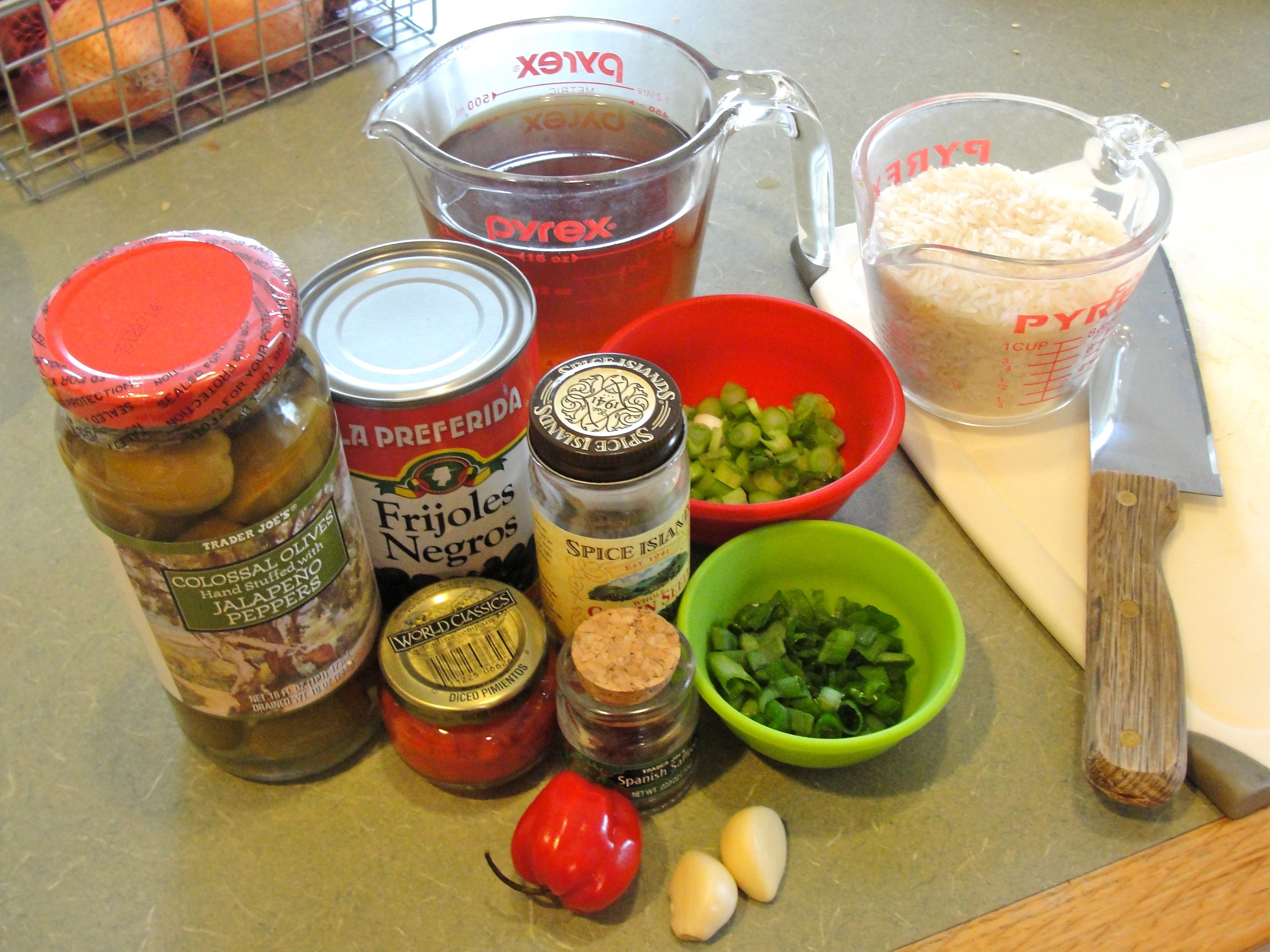
Scotch Bonnet Beans and Rice ingredients:

  • rice (I used 1 cup rinsed jasmine rice, because that’s what I had on hand)
  • water from reconstituted ancho chiles or soup stock (2 cups)
  • scallions (2 chopped, white and green portions separated)
  • black beans (1 can, rinsed and drained)
  • garlic (2 cloves minced)
  • sweet corn (frozen, ~2/3 cup)
  • pimento (2 oz.)
  • large green olives (~6, sliced, I used jalapeno-stuffed olives)
  • pickled jalapeno (1 T., minced)
  • scotch bonnet pepper (optional, 1, seeded, deveined, dry roasted, and minced as finely as possible, or substitute a habanero, jalapeno, or some other milder pepper)
  • cumin seed (1/2 t.)
  • saffron threads (optional)

Scotch Bonnet Beans & Rice Ingredients

I placed most of the ingredients (except for the beans and scallion greens) in a rice cooker, with the corn in the steamer basket, and cooked with the rice.

Cooking the Rice

When rice is done, toss in the steamed corn, black beans, scallion greens, and salt to taste; and using chopsticks; using chopsticks is a good tip if ever you need to mix fine ingredients into a moist or somewhat sticky rice because it won’t stick to the utensils too much.

Scotch Bonnet Beans & Rice for stuffing, as a side dish, and for rice fritters

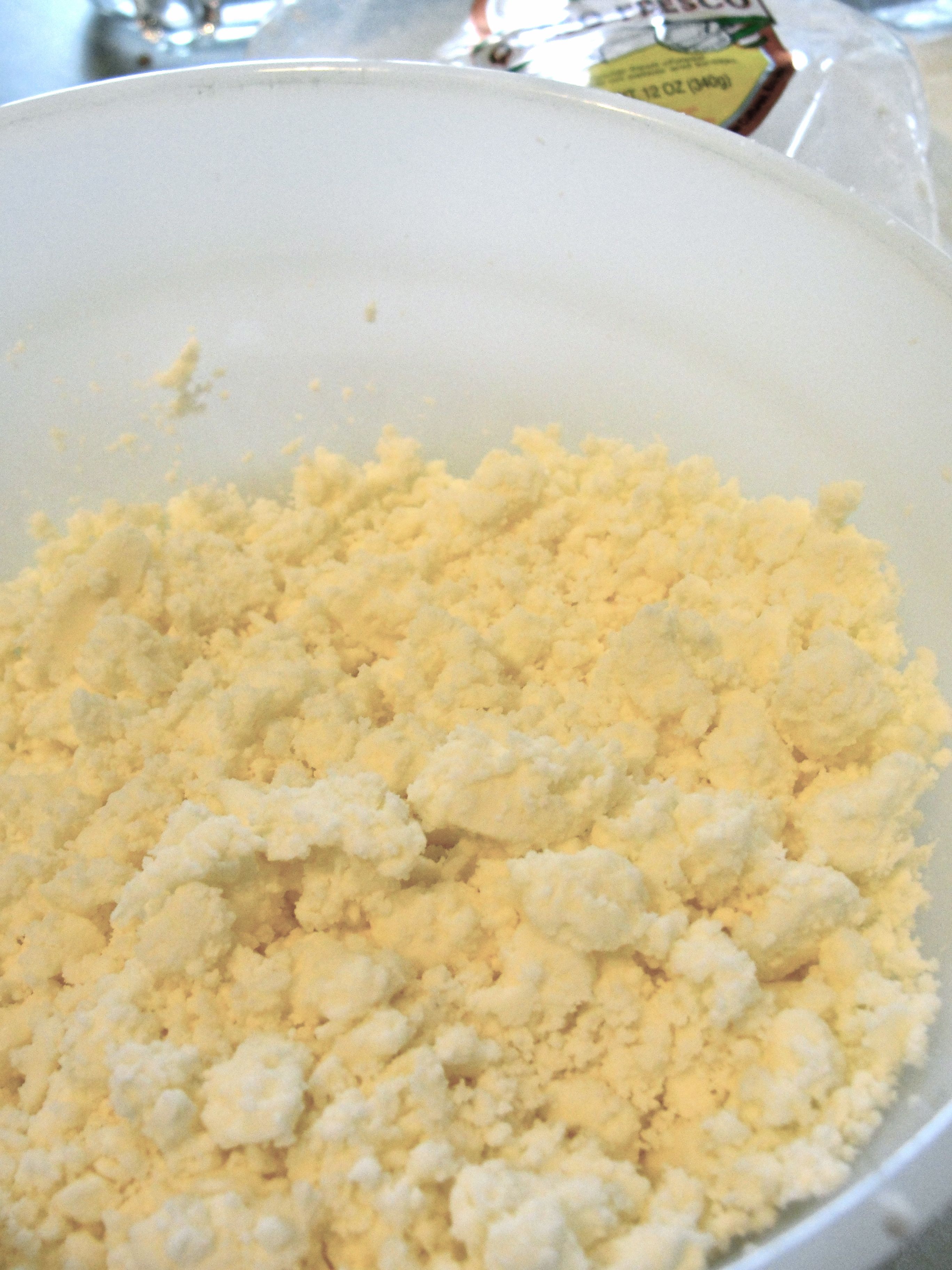
Our simpler stuffing is the queso fresco.

Crumbled Queso Fresco

When the peppers are reasonably cooled, carefully peel them, rinse them in water, cut a slit perhaps 2/3 down one side and carefully remove the seed bunch, any veins, and any loose seeds.  I leave the stem intact for handling and for presentation.

Deseeding and Cleaning Poblano Peppers

Next, carefully stuff the peppers as desired.  For some, simply fill them moderately with crumbled queso fresco.  For others, perhaps stir queso fresco in with the beans and rice to form a stuffing.

To bake peppers rolled in tortilla chip crumbs, first dip the stuffed pepper in an egg wash, then roll in crushed tortilla chips, and place in a greased baking pan.  Bake at 375°F for 45 minutes to 1 hour (occassionally check to be sure chips aren’t too brown), or partially bake (e.g., 1/2 hour) and store to reheat by baking later.

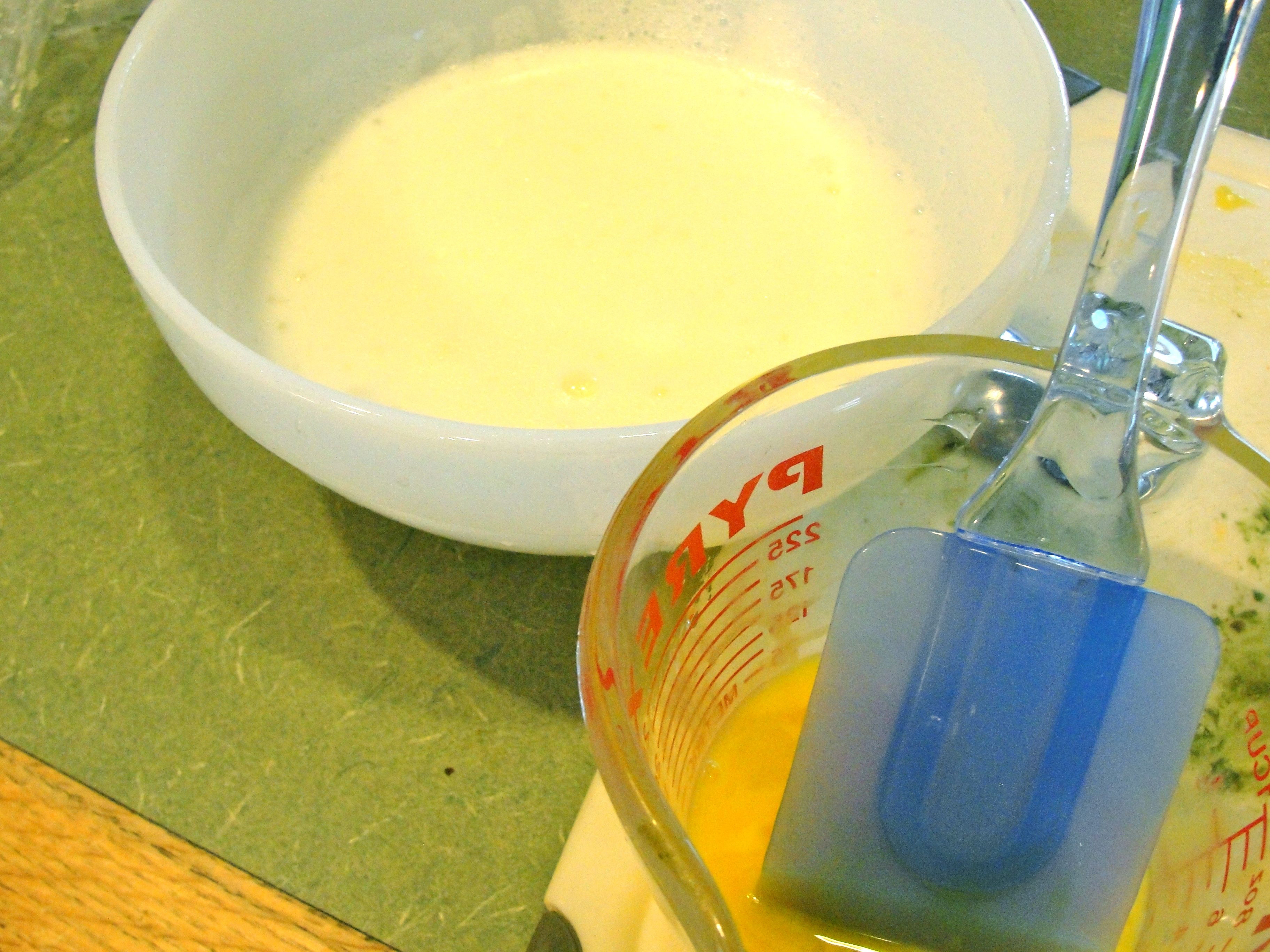
To fry peppers in oil, prepare the egg batter for the peppers by vigorously whip the egg whites with a whisk into a meringue consistency (a large metal bowl is best, but I don’t have one), then carefully fold the yolks in to mix evenly, but be careful not to overstir, which will cause the whites to collapse.

Whipped Egg Whites and Separated Yolks to be folded together for Batter.

For the peppers to be fried in oil, first coat them with flour.

Dipping a Stuffed Poblano in Flour before Egg Batter

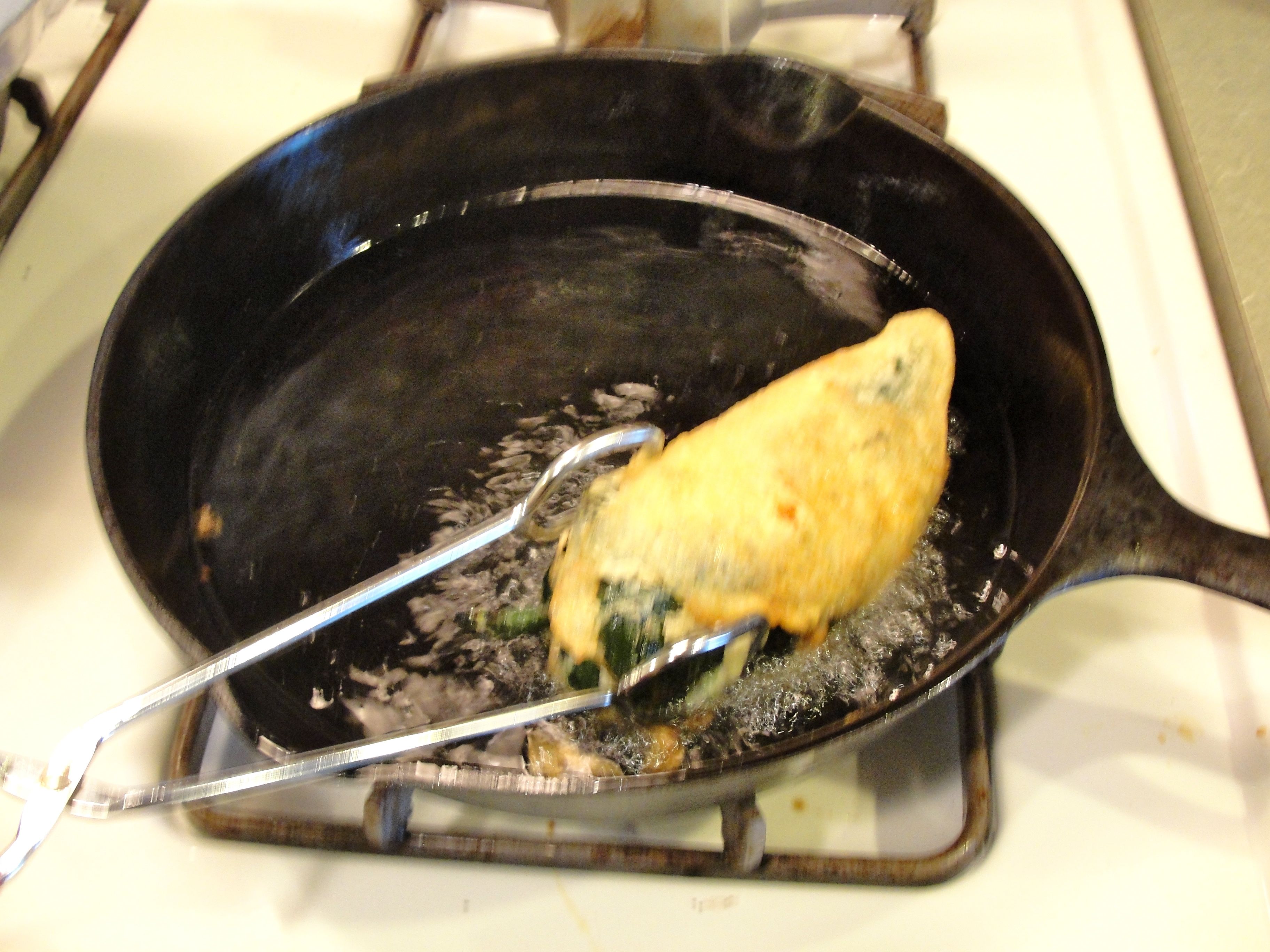
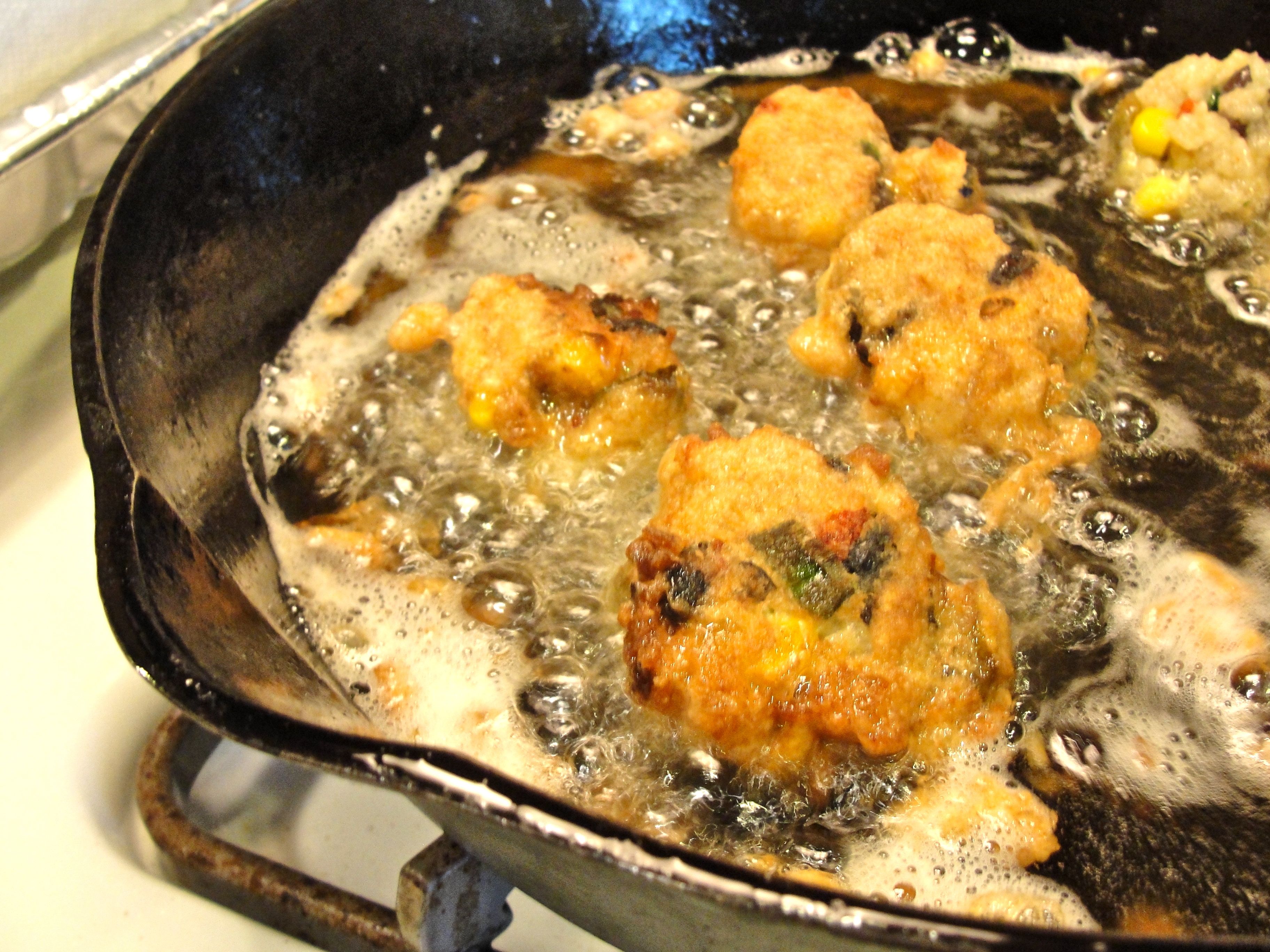
Then dip them in the egg batter, and place them in hot oil, e.g., about 1/2 inch deep; I tested the oil temperature by frying some corn tortilla strips.  Be sure to adjust the temperature so that it sizzles when something is dipped in, but doesn’t cook so fast that it will quickly burn.

Blurry Action Shot: Frying Chile Relleno

Turn the peppers occasionally to cook on each side, being careful to avoid spilling the filling.  (Be particularly careful when cooking the side that was slit open.)
After frying, place on paper towels to absorb excess oil.

Plate the chile relleno atop a sauce or salsa, and accompany with a side, such as my scotch bonnet beans and rice.

Chile Relleno with Ancho Chile Sauce and Scotch Bonnet Beans & Rice

As an optional side, and since my beans and rice was a bit sticky, I formed small balls (~1 in.), rolled them in the egg batter and fried them in the remaining oil to make rice fritters.

Frying Rice Fritters

Of the two chiles rellenos preparations (fried and baked), I was more pleased with the appearance of the typical fried chile relleno stuffed with cheese.

Lastly, while I kept this meal completely vegetarian, I can’t help but think that cooked chorizo would be a great additional ingredient to the stuffing. :)

This was a respectable first try, and I enjoyed the result, and even used some leftover rice and beans to make a breakfast burrito this morning.

Let me know your chiles rellenos tricks or tips!  This is definitely a recipe that benefits from experience.

Here are some recipes I consulted for ideas:
Oh ya, and here’s a non-mexican Stuffed Bell Pepper recipe you might like from Katja’s Kitchen. :)

Ancho Chile Sauce

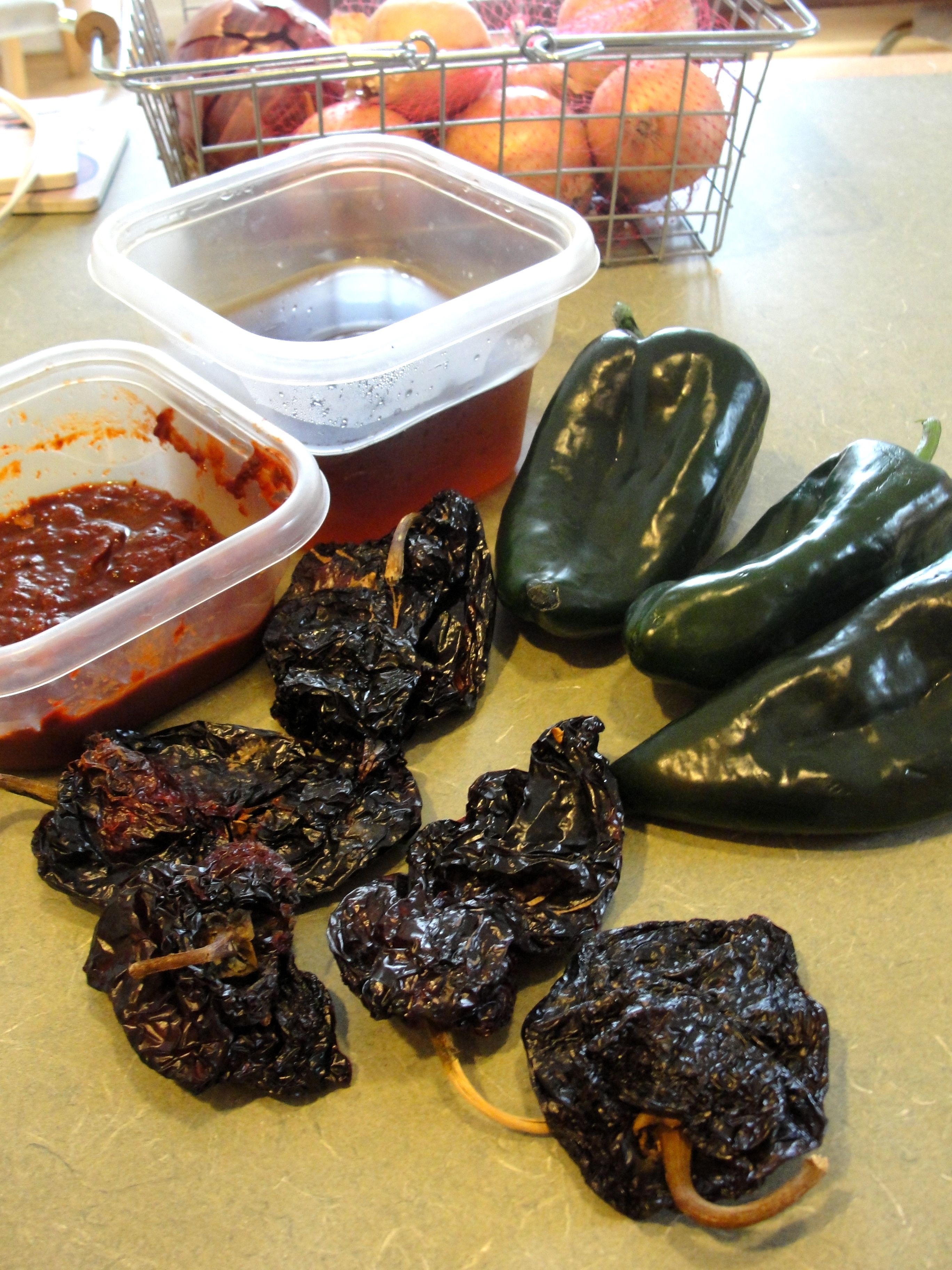
Ancho Chile Sauce, counter-clockwise from left: the finished sauce, the dried ancho chiles used to make it, the poblano pepper (that is called ancho when dried), the water left from reconstituting/steeping the ancho chiles used to make the sauce.

This past weekend I went to a great grilling party hosted by some friends from South Africa; they use the term “braai” the way Americans might use barbecue, and this party was a “bring ‘n’ braai,” i.e., bring what you’re going to grill and share.

I decided to make flank steak tacos, so I prepared this flavorful, dark red sauce as both a marinade for the steak and a taco sauce.

I have been interested in experimenting with the ancho chile for some time and to reproduce some of the great things I’ve had at mexican restauraunts; last week I stumbled across the peppers at an asian grocery for about for about $1.50 for a bag with enough to make this recipe 2-3 times.  The “ancho,” meaning “wide”, is a dried, ripe poblano pepper;  in the photo above I’ve also shown the fresh, green poblano, but it is not used in this recipe!  I guess the dried version is called “wide” because it typically appears wide and flat.

Sauce ingredients (to yield ~2 cups):

  • 4 large dried ancho chiles, pan roasted, reconstituted (save water), stemmed and seeded, rinsed, and coarsely torn
  • water from reconstituted chiles
  • roasted garlic, 6 medium-large cloves (e.g., pan roasted in skin, then peeled)
  • 1 small onion, minced
  • 2 T. tomato paste
  • 1 T. brown sugar
  • 2 T. Worcestershire sauce (or substitute another fish sauce or soy sauce)
  • 1 T. ground cumin
  • salt to taste

Begin by dry roasting the dried ancho chiles and the unpeeled garlic cloves in a pan on medium heat.  For such preparations, Chef Rick Bayless suggests doing this until the peppers just begin to smoke (flipping the peppers to do this on each side); he uses a spatula to push them flat to make better contact with the hot surface.  Roast the garlic cloves in their skin, turning occassionally, until it is tender then peel.

Dry Roasting Ancho Chiles and Garlic Cloves

Next, rinse the dried ancho chiles to clean them, and reconstitute them for at least 1/2 hour in warm water, perhaps 3 cups in a large pan or bowl; place a plate over them during this time so that the peppers stay submerged. (Alternately, you can steep them in boiling water.)  Then remove the chiles, save the water, and tear them over the sink and remove the seeds and veins, and rinse the peppers inside.

Lastly, simply combine the reconstituted chiles and other ingredients in a blender and blend until smooth; use the water saved from reconstituted chiles to acheive the desired sauce consistency.  If you have a blender with narrow-bottomed container , as I do, add the ingredients just a bit at a time with a bit of the water so that they will blend more easily.

An aside: save the rest of the water used to reconstitute the peppers!  Use it to flavor other salsa or rice, such as my Scotch Bonnet Beans & Rice!

If the sauce is too watery, reduce by simmering it in a pan until desired consistency.

Use the sauce as a marinade for flank steak, skirt steak, or other meats; apply it liberally to all sides and marinate for at least 1/2 hour, then get to grillin’!

The sauce can also be used as a dip for chips or to complement tacos and other dishes.

Chile Rellenos with Ancho Chile Sauce

Tonight it accompanied my Chiles Rellenos!
(That post is forthcoming; I’m just too tired to do it tonight.)

Here are some related recipes that I consulted: Ancho Chile Sauce, Red Chile Adobo SauceCarne Adobada, and Pumpkin and Ancho Chile Mole.

P.S. Yay for Pati’s Mexican Table: a wonderful program on PBS that I just discovered this past weekend!  This is a nice addition to one of my favorites: Rick Bayless’ Mexico – One Plate at a Time.
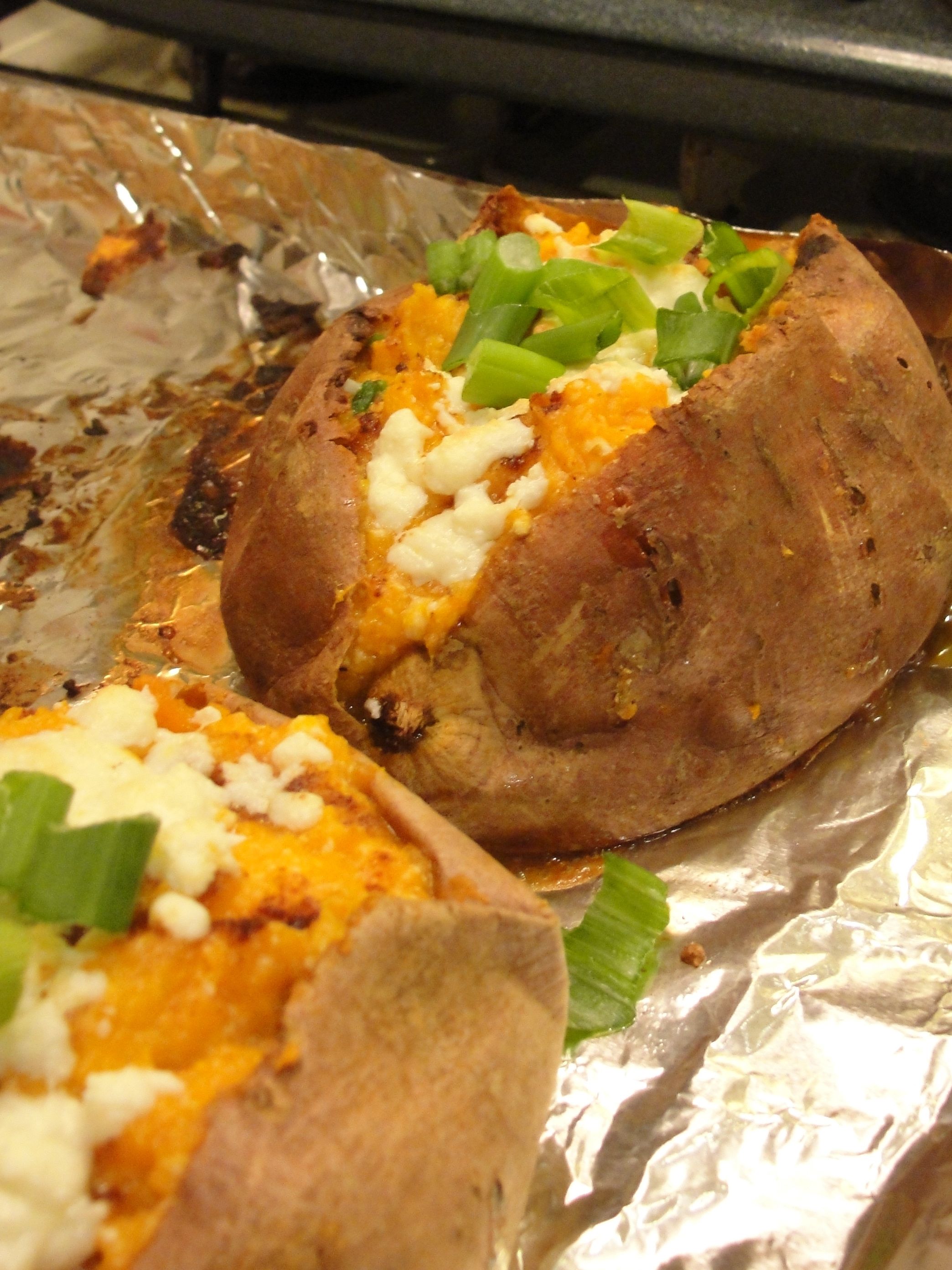
Twice Baked Sweet Potatoes

Twice Baked Sweet Potatoes

Here’s a delicious side item that I made them to accompany Peruvian Baked Chicken.
It is said that Peru is an incubator of vegetable genetic diversity, with some 8000 varieties of potato alone (although not so many are sold as produce) and the Sweet Potato being one variety found to have been there for thousands of years.

Ingredients (to serve 4):
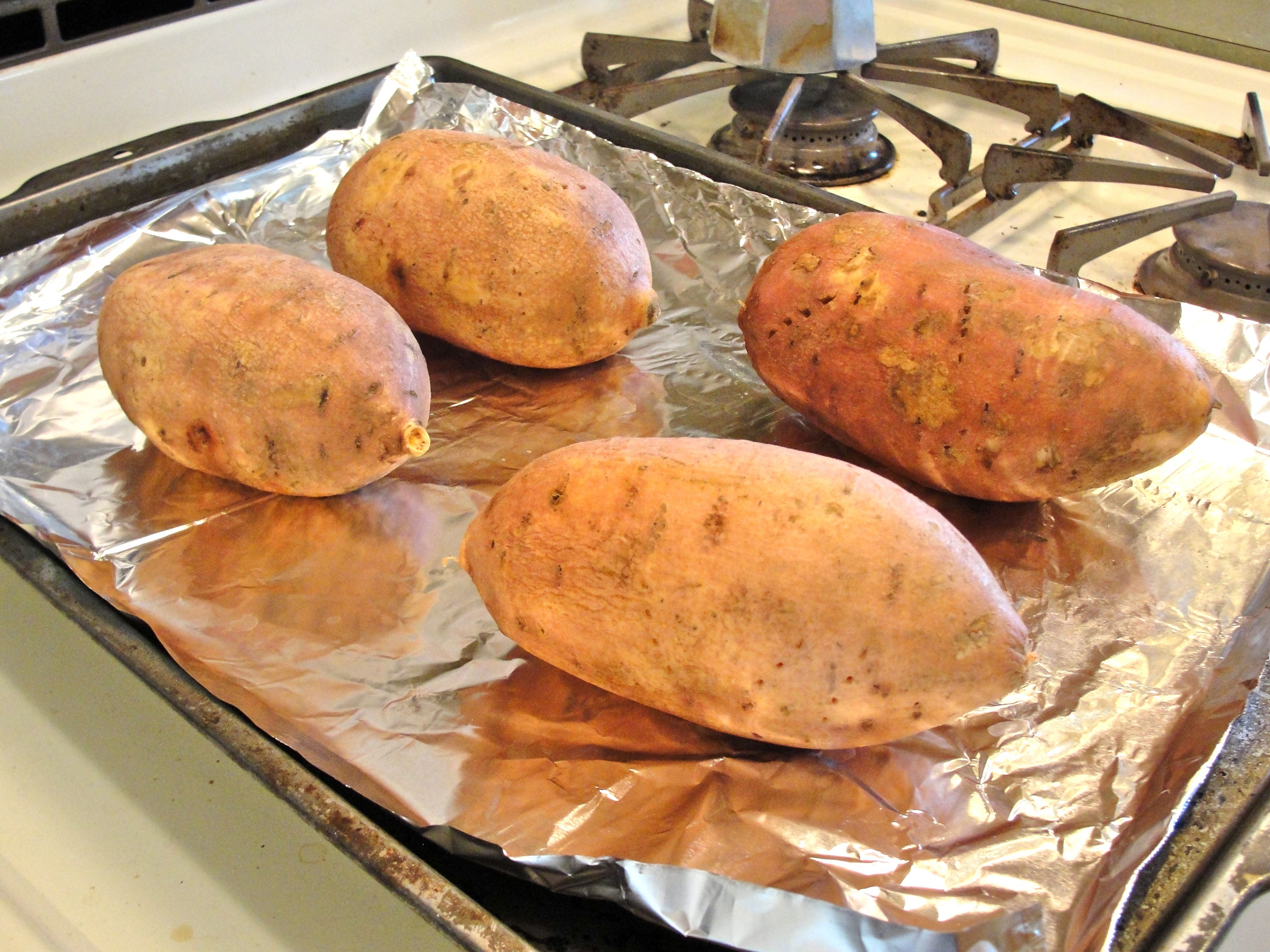
  • sweet potatoes (4, medium to large, well-shaped)
  • scallions (2, whites minced, greens chopped coarsely for topping)
  • butter (1/2 stick)
  • egg yolk (1)
  • queso fresco (6 oz., crumbled, with some reserved for topping)
  • paprika
  • ground pepper (to taste)
  • salt (to taste)

Wash the potatos and scour, but do not remove skin, except were blemished; also remove and root fragments.

To prepare for baking, poke holes in the potatoes with a fork and place them on a foil on baking sheet or jelly roll pan; the foil will prevent burning and mess from the sugary syrup that may drip from them while baking.

Bake the potatoes until tender, 1 hour or perhaps slightly more at 400°F.

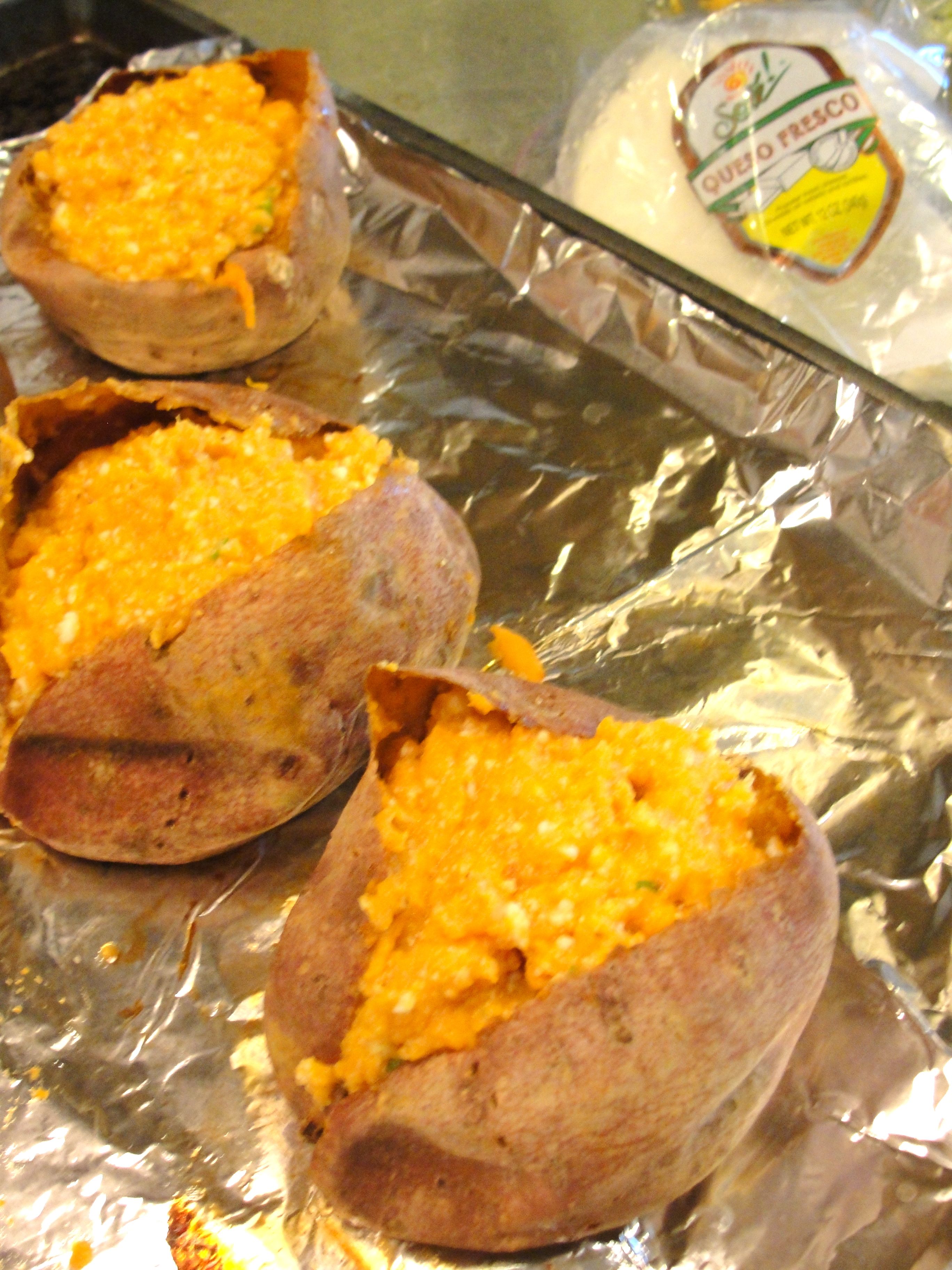
Sweet Potatoes, prepared for baking

Once baked, allow the potatoes to cool somewhat, and carefully cut a slit in the top of each potato and use a spoon to scoop out the potato, being careful not to tear the potato skin.

In a bowl or pot (such that you might prepare mashed potato in), combine potato, butter, egg yolk, most of the queso fresco, pepper, and salt, and mash until smooth and well combined.  (Queso fresco is crumbly by nature, so it will not completely mix in with potato.)

Carefully refill the potato skins with the potato filling.  Top the potatoes with a sprinkle of paprika and a bit of crumbled queso fresco, and return to the oven to melt the cheese, and perhaps just slightly brown the potato tops.

Stuffed Sweet Potatoes, preparing to return to the oven

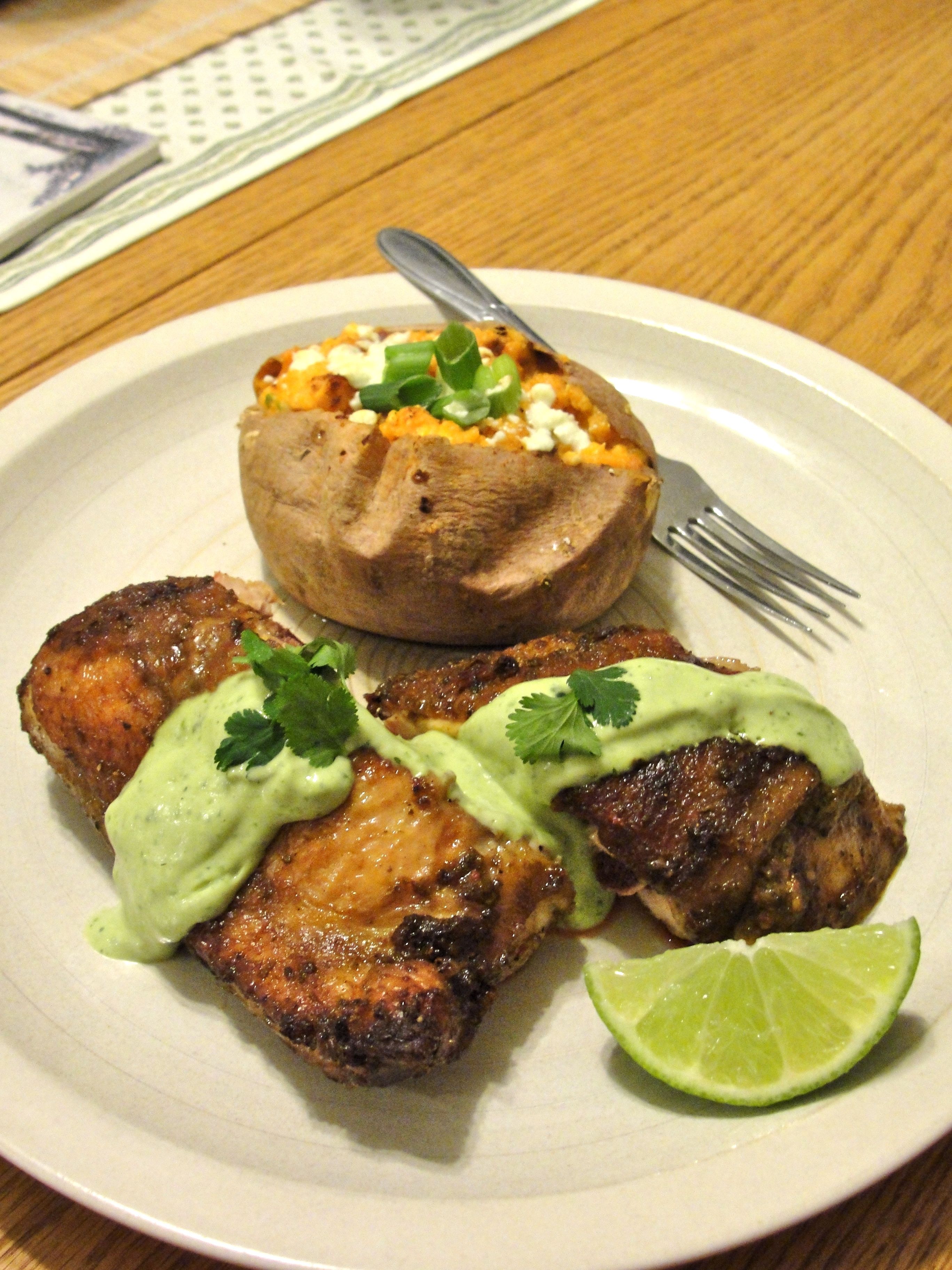
Remove from oven and top with scallion greens to serve these sweet and delicious potatoes, perhaps as I did with Peruvian Baked Chicken!

Twice Baked Sweet Potato accompanying Peruvian Baked Chicken

Here’s a similar recipe that I used as a reference (I prefer using queso fresco or feta rather than cream cheese): Stuffed Sweet Potatoes